



 40 / 92

40
ADVISING ON VCTs
Clearly, due to their risk profile and tax benefits, VCTs are not going to be suitable for everybody. Not everybody will have
the requisite tolerance for risk or capacity for loss, and not everybody will have maxed out their other, lower-risk tax-efficient
investment options. But, because of their unique features, VCTs can have a role to play at any stage of a financial plan:
accumulation, at retirement and decumulation.
SUITABILITY
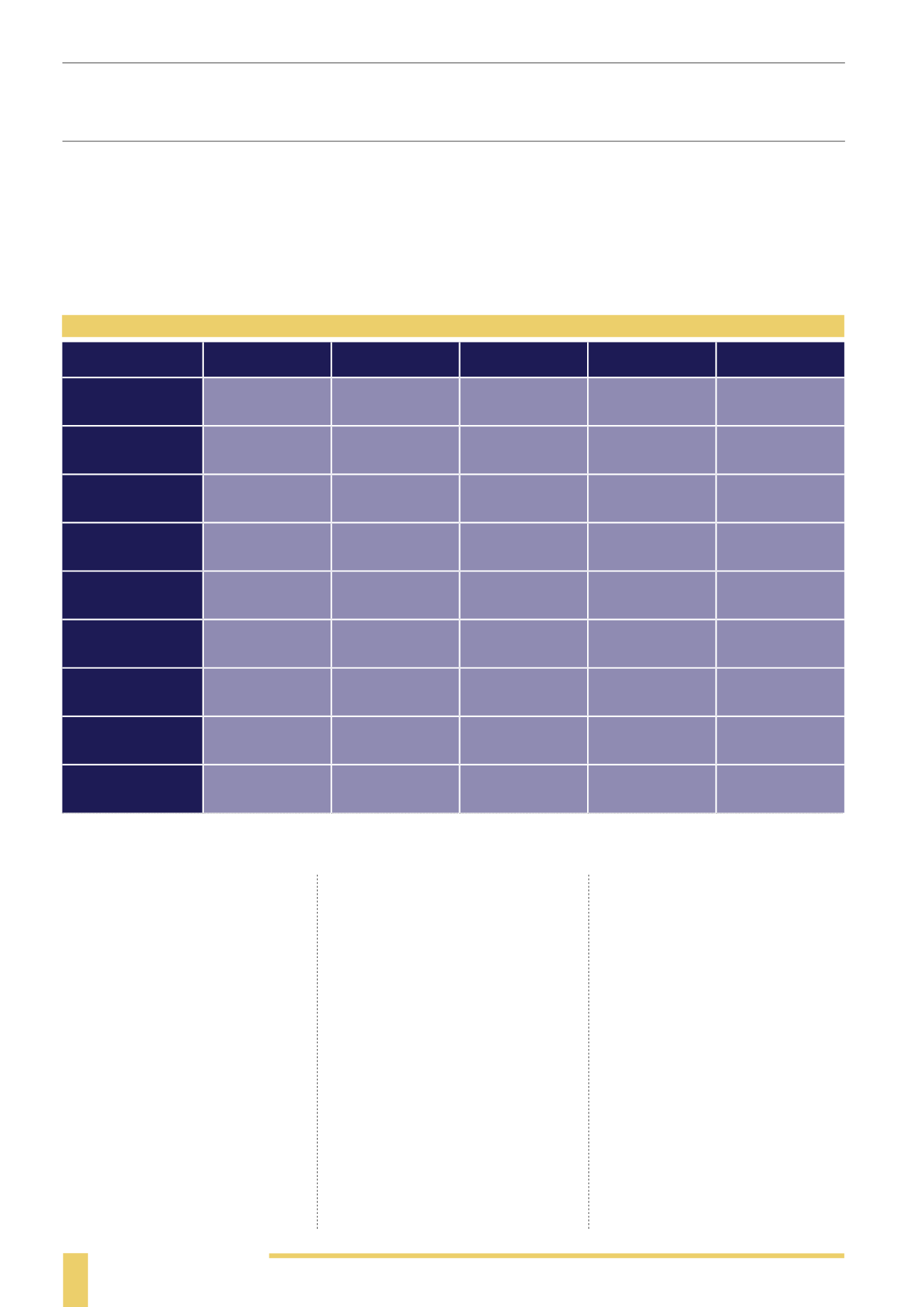
It makes sense to start by placing VCTs in the context of the other tax-efficient investment options that are out there:
The focus should be on the conventional
first - using up the ISA and pension
allowances. These are lower risk
options (or more accurately they can
be depending upon what is invested
in - they are only wrappers for allowable
investments) that provide tax reliefs
and form the backbone of saving and
investing plans. Pensions have recently
become much more attractive from an
estate planning perspective as well, with
the removal of the punitive 55% “death
tax”. Ordinarily you would expect to see
extensive ISA and Pension investments
made before VCTs are considered.
However, new lower annual and
lifetime pension investment limits,
new limits on what people earning
greater than £150,000 can save and the
threat to higher rate tax relief are all
going to mean that more people than
ever before are going to have to look
beyond pensions for other tax-efficient
investments. And consumers looking to
offset particularly high Income Tax bills
will be attracted by the upfront relief
regardless of whether they are at or
near their pension and ISA limits.
At the other end of the spectrum, EIS
and SEIS investments are usually - but
not always - more risky than VCTs. Like
VCTs, they invest in smaller companies,
but they are unquoted vehicles with
very low levels of liquidity. They have
more generous tax reliefs than VCTs,
pensions and ISAs to reflect the fact that
they are more risky.
As a consequence, all things being
equal you might expect to see VCTs, as
the lower risk option among the Tax-
Advantaged Venture Capital Schemes,
being used in clients’ portfolios before
EIS were: however, the higher annual
investment limit and additional benefits
around IHT relief and CGT deferral often
mean that EIS are preferred to VCTs.
Of course the major attraction of VCTs
is the upfront Income Tax relief, but
investors can only claim relief on what
they have paid. Therefore it is unlikely
that VCTs are often going to be suitable
for basic rate taxpayers - the relief is
unlikely to be great enough to justify
the risk.
As a rule of thumb, as you move to the right-hand side of the table, you will be looking at riskier investments. Note income in ISAs is taxed at 10%, which does
represent a significant saving for higher rate taxpayers
COMPARING TAX-EFFICIENT INVESTMENT OPTIONS
ISA
PENSION
VCT
EIS
SEIS
ANNUAL CAP
£15,240
£40,000
£200,000
£1m
£100,000
LIFETIME CAP
x
£1.25m / £1m
x
x
x
INCOME TAX
RELIEF
x
√
30%
30%
50%
LOSS RELIEF
x
x
x
√
√
IHT RELIEF
x
Depends
x
√
√
CGT FREE
GROWTH
√
√
√
√
√
CGT DEFERRAL
x
x
x
√
√
TAX-FREE
INCOME
x
x
√
x
x
TAX-FREE
LUMP SUM
√
25%
√
√
√