



 42 / 92

42
of 6% and invested £10,000 for ten
years, the return (excluding the impact
of fees and the upfront 30% Income Tax
relief) is £31,058 or 211%.
If we made the same investment, but
this time the dividends were taxed at
38.1% (the rate for higher rate taxpayers
today), the return would be £25,270 or
153% a difference of £5,788.
This suggests that participating in the
Dividend Reinvestments Schemes (DRIS)
that many VCTs run is perhaps the best
way of investing for the long run.
AT RETIREMENT - HOW DO
VCTs INTERACT WITH THE
NEW PENSIONS FREEDOMS?
It’s worth considering VCTs and
pensions, and how they interact with
each other - especially in the light of so
many recent changes to the rules and
regulations governing pensions.
LIFETIME ALLOWANCE
We’ve already mentioned the first
change to consider - the reduction in the
lifetime allowance. This has come down
from a peak of £1.8 million in 2011 to
just £1.25 million* at the time of writing,
soon to be lowered again to just £1
million.
£1 million might sound like a lot of
money, but at current rates it would
buy an annuity worth approximately
£33,000 a year (before tax) for a 65 year
old - for many people that might not be
enough for the lifestyle they want.
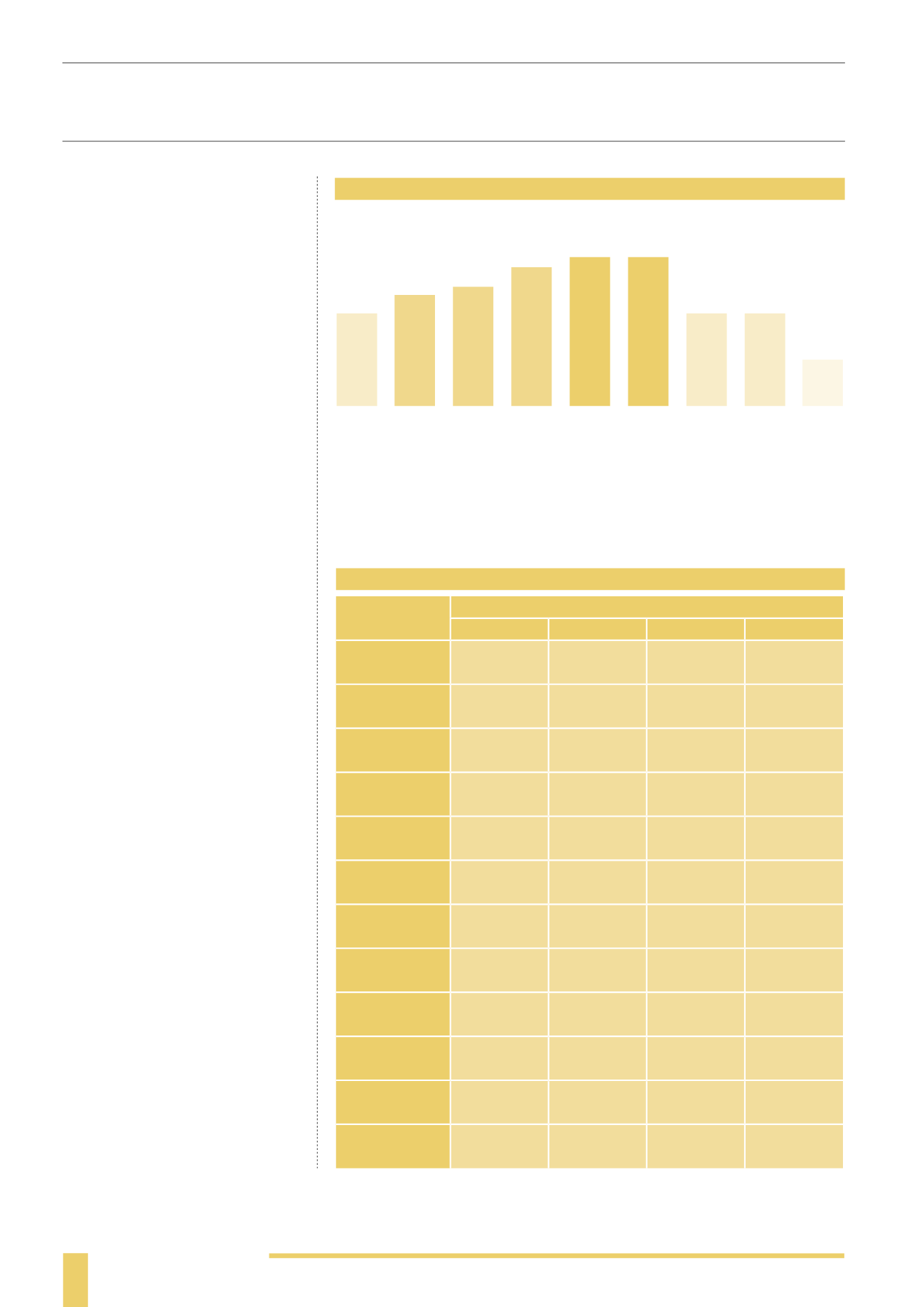
The two charts on this page and the
following page show that advisers will
have many clients who will potentially
reach, or breach, the £1.25 million limit
(note that both assume no further
contributions).
Of course, what the reduction in the
lifetime allowance means is that many
savers and investors will have to look
for other tax-efficient options, beyond
pensions and ISAs - such as VCTs.
LIFETIME ALLOWANCE
(2006-2015)
ANNUAL GROWTH RATE REQUIRED TO FUND FOR £1.25m
EXISTING
FUND VALUE
TERM TO RETIREMENT
5 YEARS
10 YEARS
15 YEARS
20 YEARS
£100,000
65.72%
28.73%
18.34%
13.46%
£200,000
44.27%
20.11%
13.00%
9.60%
£300,000
33.03%
15.34%
9.98%
7.40%
£400,000
25.59%
12.07%
7.89%
5.86%
£500,000
20.11%
9.60%
6.30%
4.69%
£600,000
15.81%
7.62%
5.01%
3.74%
£700,000
12.30%
5.97%
3.94%
2.94%
£800,000
9.34%
4.56%
3.02%
2.26%
£900,000
6.79%
3.34%
2.21%
1.67%
£1,000,000
4.56%
2.26%
1.50%
1.12%
£1,100,000
2.59%
1.29%
0.86%
0.64%
£1,200,000
0.82%
0.41%
0.27%
0.20%
“Appetite to invest in VCTs has been strong recently as investors have sought attractive tax-free yields
in an environment of low returns for savers and limits on pension contributions for higher earners”
Mark Wignall, Mobeus Equity Partners
* Note that technically this allowance can be exceeded, but anything above the allowance will be subject to a hefty 55% tax charge.
Source: HM Revenue and Customs
The limit will be reduced even further to £1m in 2016/17, and then linked to the Consumer Price Index.
Interestingly, if the original £1.5 million had been linked to RPI, the limit would be approximately £2
million
Source: HM Revenue and Customs
2006/07
£1.5m
2007/08
£1.6m
2008/09
£1.65m
2009/010
£1.75m
2010/11
£1.8m
2011/12
£1.8m
2012/13
£1.5m
2013/14
£1.5m
2014/15
£1.25m