



 31 / 92

31
The EU State Aid Risk Capital Guidelines
were updated in May 2014, and the UK
Government had to apply for renewal of
State Aid approval of the VCT scheme.
The outcome of this was two Budgets
that proposed changes for VCTs, one
in March 2015 and one in July. The new
rules proposed in July were much stricter
than the rules proposed in March - we
can only assume that the EU took a look
at what the Treasury was proposing and
decided that it didn’t go far enough. The
new rules were confirmed when the
Finance Bill was given Royal Ascent in
the autumn of 2015.
These changes have introduced a couple
of new concepts:
Knowledge Intensive Companies
have research and development costs
amounting to at least 15% of their total
operating costs, create intellectual
property and have at least 20% or more
of their workforce with relevant Masters
or equivalent higher degrees.
Independence.
For EIS relief only,
investors must be independent from
the company at first share issue. So, if
an investor wishes to be involved in a
company in an official capacity, then
they must first invest and then, at a later
date become a director.
The £12 million lifetime investment
limit includes any acquisitions of
subsidiaries that had previously
received tax advantaged venture capital
funding and it must be recalculated if
during that period, monies are used to
acquire a subsidiary or trade that had
also received tax-advantaged venture
finance. This will require stringent
record keeping.
There are some exceptions to the seven
year age limit. It doesn’t apply if:
The company had relevant risk
finance investment within seven years
of first commercial sale, or
The current investment is at least
50% of average turnover for last five
years AND the monies will be used for a
new product or geographical market, or
A previous investment met the
turnover test
On a positive note, removing the
requirement to spend 70% of SEIS
money before raising EIS money does
smooth the passage between the two
schemes out a bit for the investee
companies. In fact it is possible to raise
funds under both schemes concurrently
now, provided the shares under each
scheme are issued on different days.
All three of the tax advantaged venture
schemes now have a ten year sunset
clause, so they will be reviewed again
in 2025 – this does suggest that we will
now have a decade of stability, although
HM Treasury reserve the right to amend
this date.
One other issue to note unique to VCTs:
There will be no grandfathering of
“protected money”, meaning that the new
rules will apply to all undeployed funds,
not just any new money the VCT raises.
All of this means that some VCTs’ risk
profiles will change. The new age limit
on investee companies means that
the focus will be much more on early
stage investing, and disqualifying
Management Buy Outs and company
acquisitions means that money will
be deployed more as development
capital rather than expansion capital.
VCT managers who were already
focused on these areas of the market
and these kinds of activities will not be
impacted much (and indeed may be
looking forward to securing a larger
share of the market), but other VCTs
will have to change their business
model and may be seeking to acquire
early stage investment experience. All
VCTs will need to carry out thorough
due diligence and have a clear
understanding of what the actual trade
being funded is to ensure compliance
with the rules, but of course this is
nothing new for VCTs.
“Government regularly makes changes to VCT legislation to ensure that they meet their policy
objectives. The changes will mean that some managers may need to alter the investment mandate
of certain VCTs”
Paul Latham, Octopus Investments
WHAT IS STATE AID?
State Aid is any advantage granted
by public authorities through state
resources on a selective basis to any
organisations that could potentially
distort competition and trade in the
European Union. Some State Aid
is illegal under EU rules because it
distorts competition in a way that is
harmful to citizens and companies in
the EU. But where it is unavoidable,
State Aid can be given legally by:
Using one of a set of approved EU
mechanisms for State Aid
Getting approval for the
particular scheme from the EU
Commission
VCT
EIS
SEIS
Risk
Relief
+
+
-
-
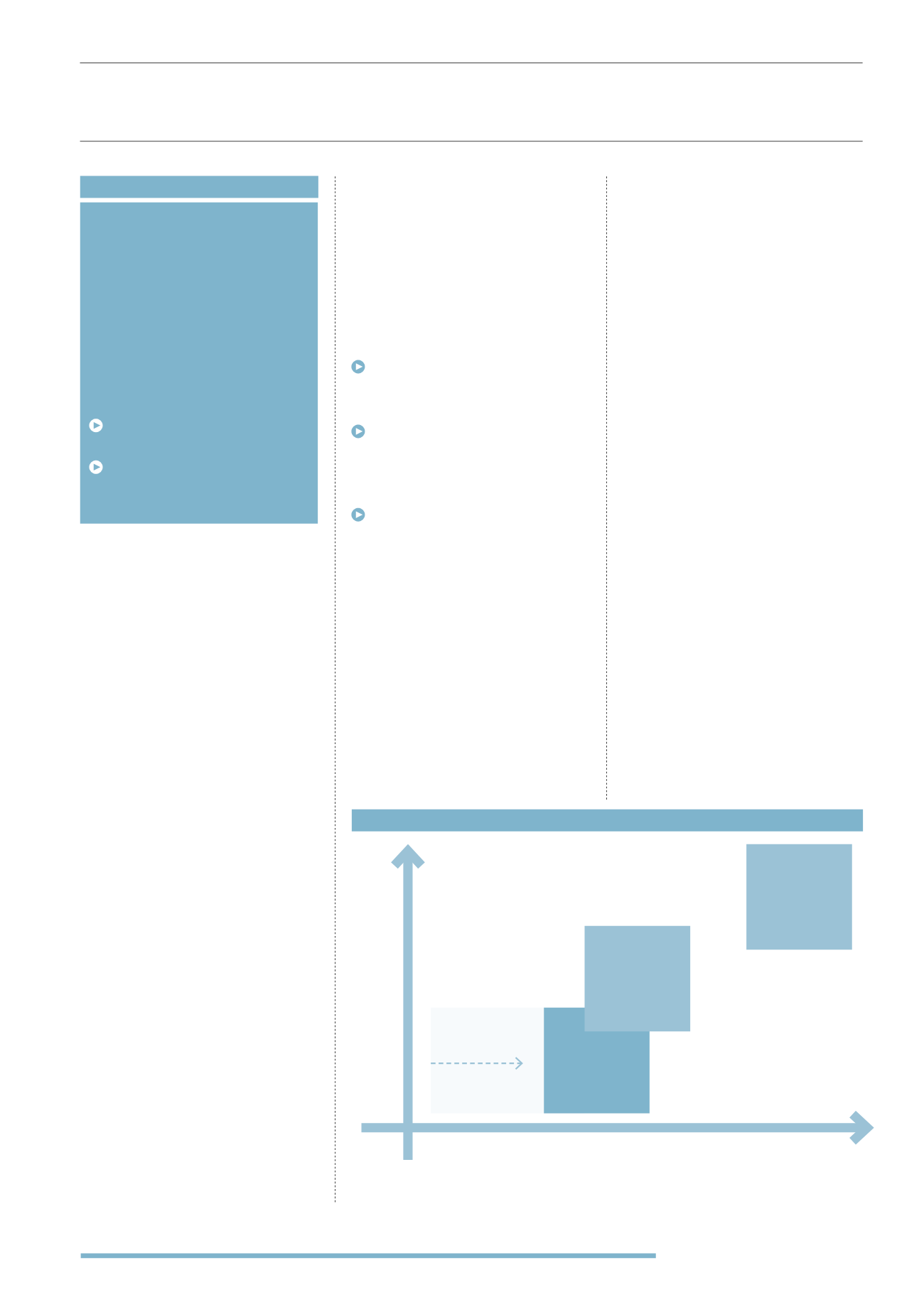
IMPACT OF THE CHANGES PROPOSED IN THE SUMMER BUDGET
Some VCTs will now have to change their business model - in general the lower risk VCTs that acquired
businesses