



 34 / 92

34
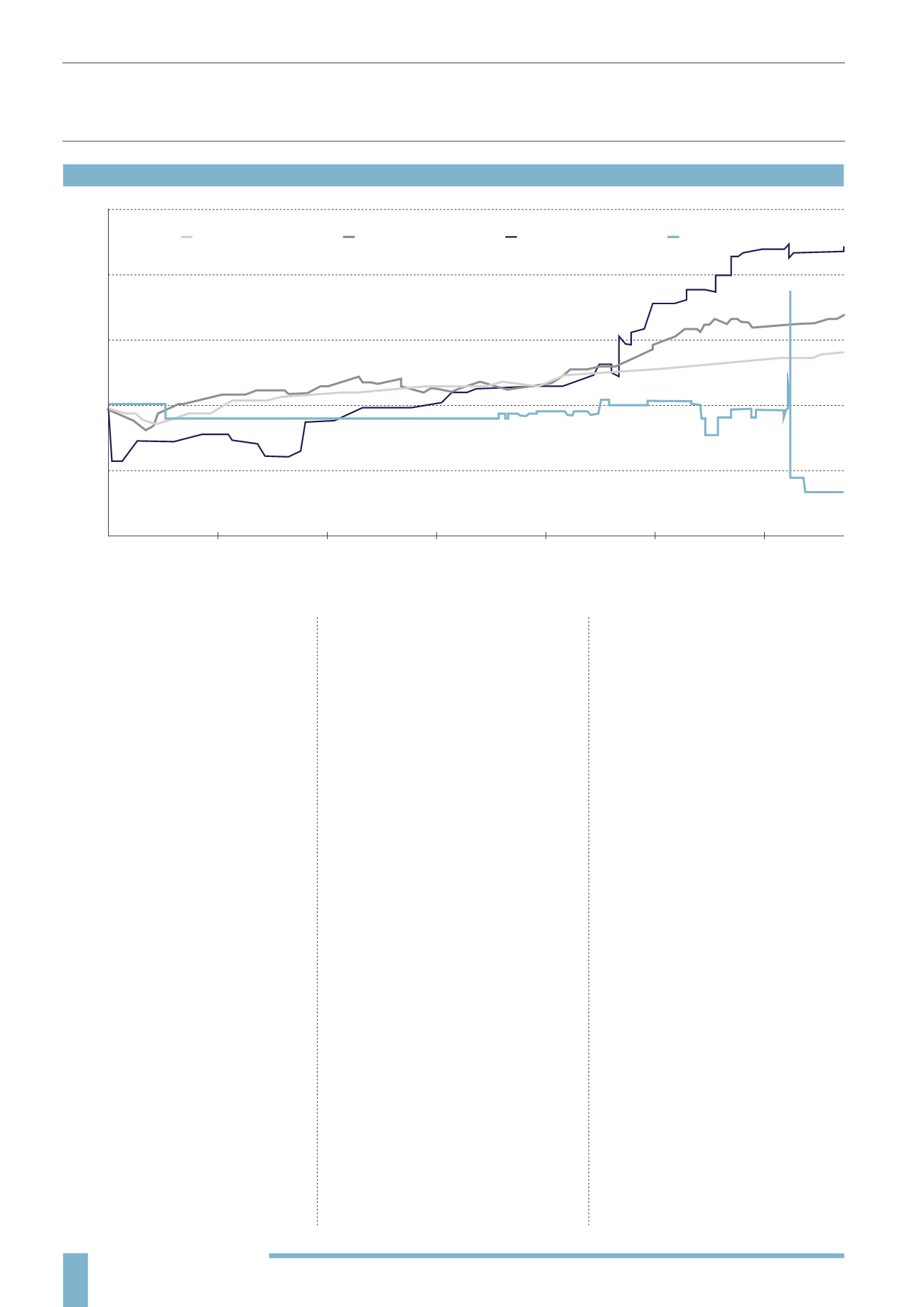
And by adding in just two individual
funds, we can see that the sector
averages mask a wide range of
performance from their constituents
(and a high degree of volatility in some
funds).
Now, we suspect that none of this
will be new news for many readers,
and it’s certainly not really any
different from examining mainstream
fund performance. Indices are not
representative of individual fund
performance, managers can have
good spells followed by lean spells
and performance can look stunning
or average depending upon the
measurement period. Funds need to
be judged on their own merits, in the
context of their stated objectives, asset
class and risk profile. But we do think
that there are two key issues that merit
extra attention when it comes to VCTs.
One is the importance of income to the
returns achieved. The other is (again) the
issue of the NAV versus the share price.
Not only is the NAV frequently higher
than the share price, but it is also a
much more opaque measure. This is
really something to be queried in due
diligence. Who calculates the NAV, how
often do they do it and how independent
are they?
The NAV is of course dependent
upon the valuation of the underlying
investee companies, so the accuracy
of these valuations needs to be taken
into account. Established valuation
guidelines are followed by VCT
managers, but within these there is
room for interpretation - small, unlisted
companies are hard to value and so
there is an element of human judgement
in the process. The timing and frequency
of valuations can have an impact, and
the actual realisation obtained for an
investment may differ materially from a
valuation, depending on the motives of
the buyer and the VCT manager.
This is, of course, much more of an issue
for Generalist VCTs and much less of an
issue for AIM VCTs, where the valuation
of the underlying holdings is down to the
raw market forces shaping AIM.
Lower levels of transparency are
something that goes with the territory
when investing in smaller companies
and this is one of the reasons why VCTs
are considered high risk. It requires an
awareness that performance is harder
to measure, and that it can then be hard
to realise the value of that performance
(liquidity again). This is another area
where the active VCT manager hopefully
earns their money - by establishing and
maintaining genuine valuations for the
underlying firms, and therefore providing
a transparent way to invest in a less
transparent market for their investors.
PORTFOLIO MANAGEMENT
AND PORTFOLIO RISKS
There are a couple of issues around
the construction and running of VCT
portfolios that are worth examining, as
they can impact upon the performance,
liquidity and risk of the investment.
DEAL FLOW AND
FUNDRAISING
This is a problem across the fund
management sector - paid a percentage
of Assets Under Management (AUM),
funds can be tempted to operate as
asset gatherers rather than asset
managers. Having raised more cash than
they have the capability or deal flow to
deploy, fund managers might be rushed
into making poor quality deals. This
links to the point about transparency we
made above. It would be very difficult to
identify early on if bad deals were being
made - not because of some subterfuge
on the part of the manager, but simply
because of the nature of investing in
unquoted equity. (And we note that
past performance is the biggest driver
“A lot of clients and some financial advisers do not understand that VCTs are based on a private
equity and venture capital operation, where a balance must be struck between having cash
available and being able to actually deploy it”
Mark Wignall, Mobeus Equity Partners
VCT SECTOR PERFORMANCE
(2008-2015)
Source: FE Analytics
Performance over the five years to August 2015 (rebased, income reinvested)
Dec 08
150%
100%
50%
0%
-50%
-100%
Dec 09
Dec 10
Dec 11
Dec 12
Dec 13
Dec 14
VCT AIM Quoted
VCT Generalist
Fund C
Fund D