



 16 / 40

16
DEMAND FACTORS
Demand is reliant on commodity
production and distribution
requirements and this is strongly
influenced by macroeconomic factors
and in particular their effects on
commodity supply industries such as
energy, manufacturing and construction
4
.
In terms of commodities, iron ore and
coal (both sued in the production of
steel) make up almost two-thirds of the
Dry Bulk shipping industry and China is
currently the biggest consumer of these
two commodities.
35
MACROECONOMIC ELEMENTS
The close correlation of world trading
activity and GDP levels and the resulting
effects on the Dry Bulk shipping market
are well known; with the contributions
of China, India and Brazil increasing as
their GDP growth rates are significantly
higher than those of developed
countries. It is expected that trade
between Africa and Asia and the Middle
East and Asia will keep growing at a
higher pace than the rest of the world
as we approach 2020, with a positive
effect on the Dry Bulk market
4
. Having
vessel types operate. Drewry’s 3Q 15
Forecaster noted that delivery numbers
have remained consistent for Supramax
and Capesize vessels in the third
quarter, with shipowners still taking
deliveries of Supramax vessels as grain
trade was seen flourishing in the ECSA
region in the third quarter with growth
anticipated in the Black Sea grain
shipments in the last quarter of 2015.
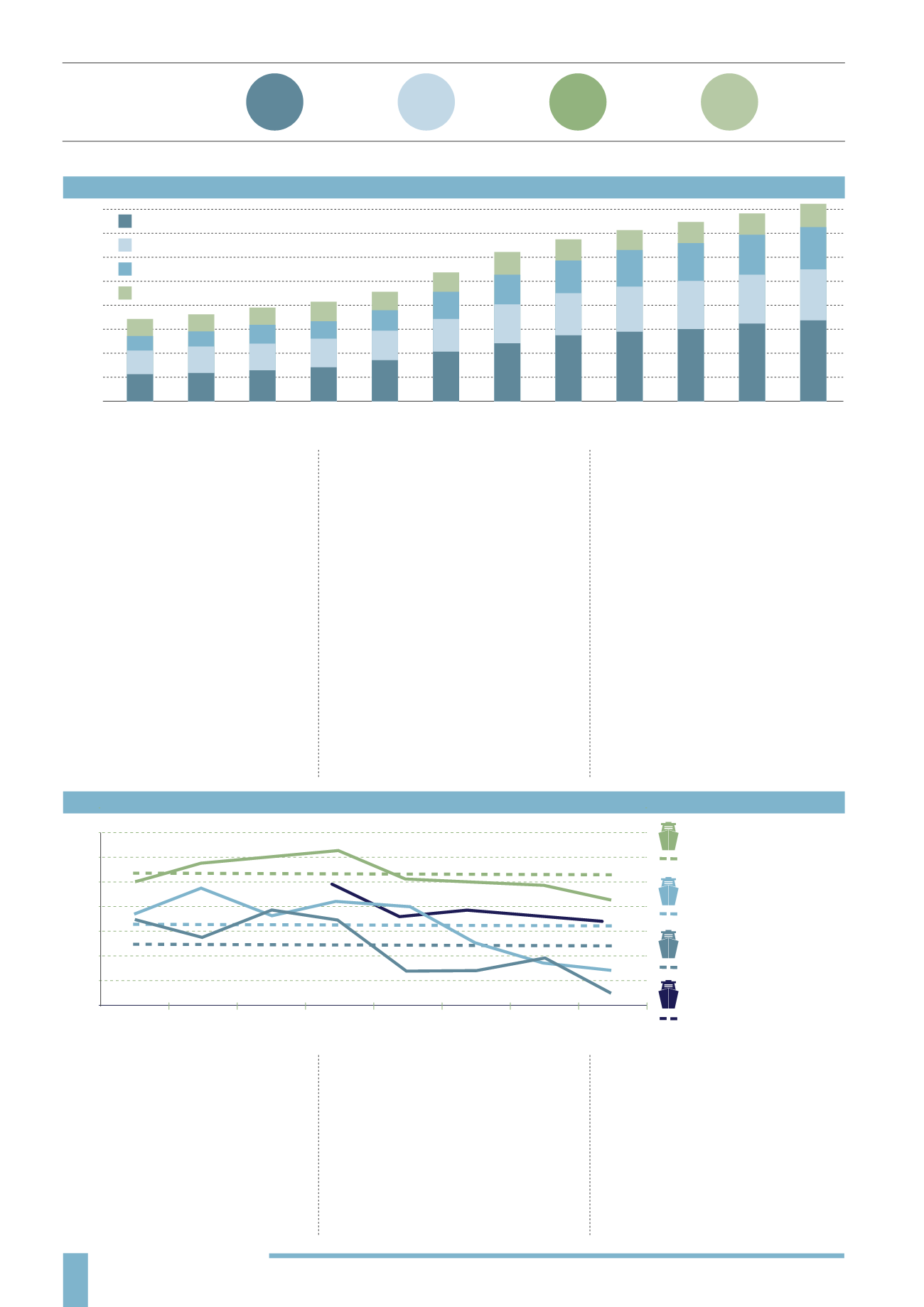
Increased demolitions are a symptom
of a weak market and 2015 is likely to
be a record breaking year in terms of
vessels being sent to the scrapyards.
This occurs when a ship reaches the
end of its useful life at around 25 years,
but in a depressed market, it is not
uncommon for ships to be scrapped
at 20 years. In the first six months of
2015, 19.5 mdwt were demolished,
an increase of approximately 145%
compared to the same period in 2014
30
and Drewry expects demolition to
increase further as small players,
particularly those burdened with debt
repayments on top of standard opex,
will find it difficult to to survive for long
in the weak freight market and wish
to avoid the costs of dry dock surveys.
(According to international regulation,
every sea-going vessel has to undergo
two dry docks within a period of five
years to allow for inspection to ensure
the safety of the vessel. A ship in dry
dock is a ship out of service and it is a
complex process which is expensive
and, depending on the number of days
out of the water, represents ongoing
loss of income)
32
The reducing age of vessels being
scrapped in 2015 (with the exception
of the largest vessels) indicates the
growing pressure that low freight prices
places on ship operators to cut their
losses, particularly with older vessels
incurring higher operating costs and
thereby diminishing the scope for profit
in poor market conditions.
33
The average age reduction is around 4
to 5 years since 2011, with Handymax
and Supramax falling from 30.6 to 26.6
years.
34
Source: British Marine
NUMBER OF VESSELS
AT DEC 2015:
(TOTAL 10,689 VESSELS)
CAPESIZE
309.6 mdwt
196.4 mdwt
179.3 mdwt
92.3 mdwt
PANAMAX
HANDYMAX
HANDYSIZE
3323
3266
2467
1633
DECREASING DEMOLITION AGE
(YEARS)
(2008-2015)
FORECAST DRY BULK FLEET DEVELOPMENT
(2005-2016)
HANDYSIZE
average age since 2008
average age since 2008
average age since 2008
average age since 2011*
* Data for 2008 to 2010 for Handymax/Supramax unavailable at time of going to print
PANAMAX
CAPESIZE
HANDYMAX/SUPRAMAX
Source: Drewry
34
2008
34
32
30
28
26
24
22
20
2009
2010
2011
2012
2013
2014
2015
Years
Capesize
Panamax
Supramax
Handysize
2005
0
100
200
300
400
500
600
700
800
2006
2007
2008
2009
2010
2011
2012
2013
2014
2015
2016
Source: Market Realist
mdwt