



 25 / 92

25
THE INVESTMENT CASE
There’s a multi-faceted investment
case for VCTs - as there is with most
investments. Of course the tax benefits
are very attractive and provide a great
incentive for investment, but the old
adage that the “tax tail should not
wag the investment dog” applies here
- the investment has to make sense
in its own terms and not just as a tax
planning exercise. With this thought
in mind, we’re going to leave the tax
reliefs to the end and look at the other
aspects of the investment case first.
SMALLER COMPANY
INVESTING
There’s a good case for investing in the
kinds of smaller companies that are
VCT qualifying (new shares of privately
owned or AIM listed companies with
fewer than 250 full-time equivalent
(FTE) employees and gross assets of
no more than £15 million). It’s smaller
companies that go on to be the giants
of tomorrow, and depending upon
where we are in the business cycle, they
can offer a lot more value than bigger
companies. They are less researched
than larger listed firms, so there is more
opportunity for investment managers
to identify bargains and find ways in
which they can help to grow business.
So the first point in favour of
smaller company investing is the
opportunity to identify the kind of
value that is much harder to find (or
some might say impossible to find)
in the mainstream market today.
As the businesses grow, the VCT might
seek to exit, either through a trade sale
or listing, realising the value of their
investment. For example, over the
last three years (to August 2015) AIM
VCTs have generated a total return of
26%, excluding income. Over a similar
period, the AIM index returned around
7%. However, price performance is
patchy with wide distributions, so we’ll
look at this in more detail on page 33.
But not all VCTs are just looking
for profitable exits. Many VCTs are
focused on generating income for their
investors. The average VCT yield at
the time of writing is 8.5% (although
of course as with all averages that
44%
35%
3%
7%
11%
number hides a huge amount of
variation, ranging from zero to the
high twenties). Often these yields are
achieved by Generalist or Limited Life
VCTs providing loan notes to larger
companies, securing healthy income
streams, or investing in established
firms with regular distributions of
profits. It’s also worth noting that while
VCTs’ share prices will correlate with the
markets, very often their underlying NAV
and ability to generate income is not.
As we see when we examine the
investment performance information
on VCTs, the income is the major
component of the total return for
many of them. Selecting a high
yielding VCT and then reinvesting the
income appears to be the best way of
maximising the return (consider that
the income is not taxed).
So another reason to invest in smaller
companies is to capture yields that
would be difficult to find elsewhere -
with interest rates set so low, bonds
and other fixed income investments
are much less attractive than in a
normal environment, and high yielding
mainstream large cap equities are also
considered to be overvalued by some
measures.
The final reason to invest in smaller
companies is less about investment
returns and more closely connected to
the impact on the investee companies
we were talking about in the
VCTs in Focus
section.
VCT DIVESTMENT
(2014)
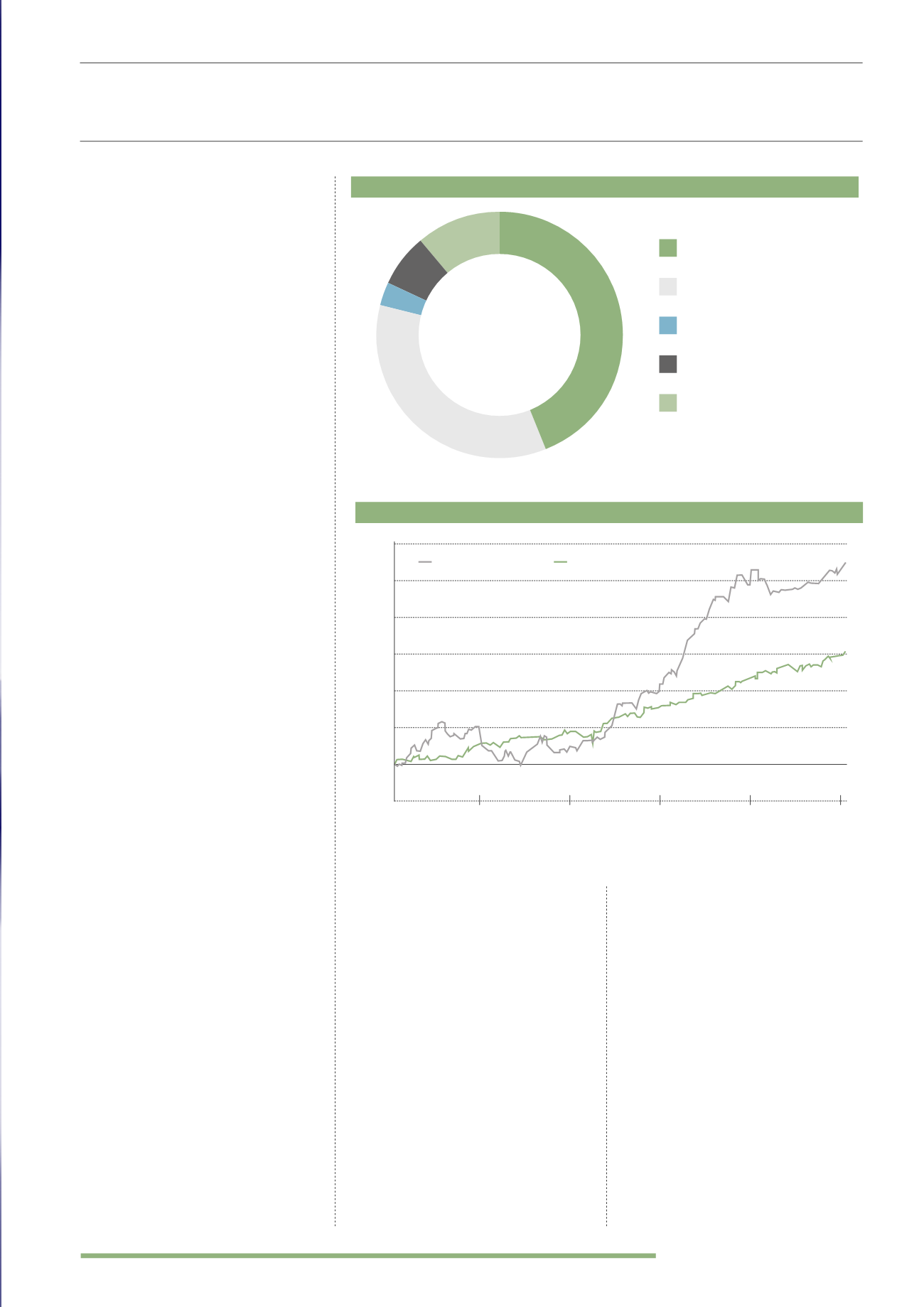
VCT SECTOR PERFORMANCE
(2010-2015)
82%
Of investee companies
exit VCT portfolios as
thriving businesses
Trade sale
Secondary market
Sale to management
Administration
Other
Source: AIC, Going for Growth (2014)
There are a number of exits routes for VCTs investing in smaller companies
Performance over the five years to August 2015 (rebased, income reinvested)
60%
50%
40%
30%
20%
10%
0%
-10%
Aug 10
Aug 11
Aug 12
Aug 13
Aug 14
Aug 15
Source: FE Analytics
VCT AIM Quoted
VCT Generalist