



 12 / 92

12
VALUE FOR MONEY?
ADVISERS MUST LOOK UNDER THE BONNET
As specialist investments, higher charges than stock market
based funds can be justified for VCTs. Specialist investment
teams need to put lots of time and effort into doing deals with
smaller companies where the flow of information is limited,
the firms are illiquid and the risks are high. Not all of these
deals come off, but the resource-intensive process still needs
to be paid for. Doing it well can pay handsomely, but the
expertise doesn’t come cheap. These charges are taken in the
form of initial fees, ongoing charges and bonuses for good
performance, although some VCTs charge investees rather
than investors.
It’s also important for advisers to note that some VCTs may
also charge arrangement and deal monitoring fees, fees for
placing non-executive directors on the board of their investee
companies and depository or custodian fees. They may also
charge the underlying investee companies. These underlying
costs should be flagged in the prospectus and it’s important that
as part of their selection process advisers examine them and
take a view on whether they represent good value for money.
The concern is that between the initial costs, annual costs
and discount on the NAV at exit, perhaps as much as half of
the 30% Income Tax relief could be wiped out. We look at
the issue of fees and incentives (and ensuring they align the
managers’ interests with investors’) on page 58.
The majority of advisers will be familiar with the risks of investing in smaller companies, be they AIM listed or unquoted. Smaller
companies can often (but not always) have weak or unproven business models, less financial resilience and be overly reliant upon a
handful of big customers.
However, there can be other risks hidden under the bonnet of VCTs that advisers need to be cognisant of: how liquidity is provided,
the provider’s ability to maintain the discount to the NAV and the interaction between fundraising and deployment are all examples
of nuts and bolts issues that require a little more digging during the due diligence process. We outline the challenges for advisers
and how they can overcome them on page 40.
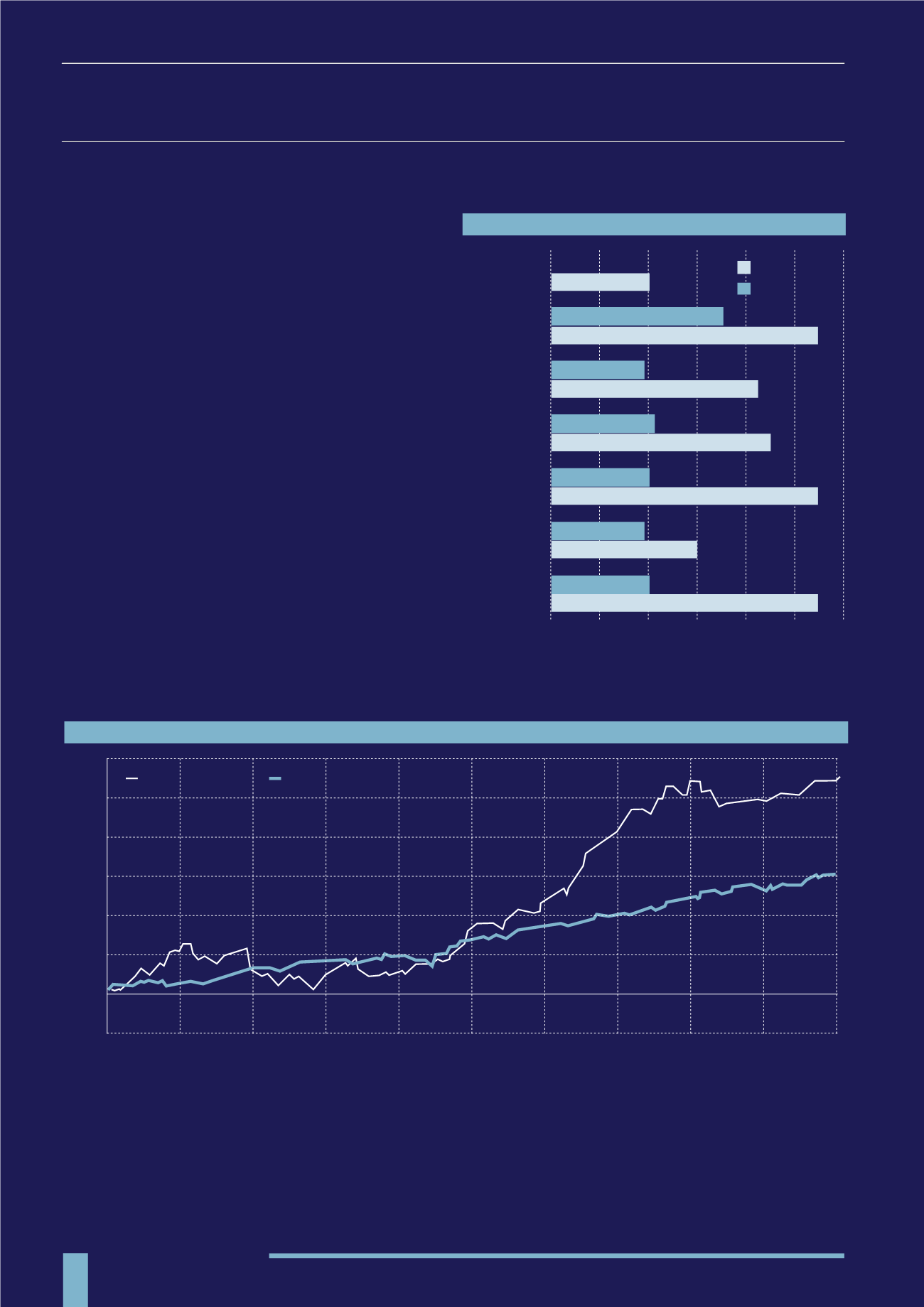
VCT CHARGES
(2015)
MINIMUM
MAXIMUM
AVERAGE
MEDIAN
MODE
LOWER
QUARTILE
UPPER
QUARTILE
VCT PERFORMANCE
(2010-2015)
“There can be other risks hidden under the bonnet of VCTs that advisers need to be cognisant of:
how liquidity is provided, the provider’s ability to maintain the discount to the NAV and the
interaction between fundraising and deployment”
0.0% 1.0%
Percentage charged against initial investment
where the charges are applied to investors
Volatility is not the only risk to consider with VCTs
Source: FE Trustnet (2015)
2.0% 3.0%
5.0%
4.0%
6.0%
Initial charge
Annual AMC
Feb 2011 Aug 2011
Aug 2010
-10%
0%
10%
20%
30%
40%
50%
60%
Aug 2012
Aug 2013
Aug 2014
Aug 2015
Feb 2012
Feb 2013
Feb 2014
Feb 2015
2.0%
1.92%
2.0%
2.0%
1.9%
2.0%
3.0%
3.5%
4.23%
4.5%
5.5%
5.5%
5.5%
VCT AIM Quoted
VCT Generalist