



 51 / 92

51
“Reductions in the amounts that can be saved into pensions and threats to the tax relief available
in pensions have increased the need for tax-efficient investment options”
Creating a panel of VCTs requires an upfront
investment of resources, but can save time and effort
later on and ensures compliance to a centralised
investment proposition throughout a firm
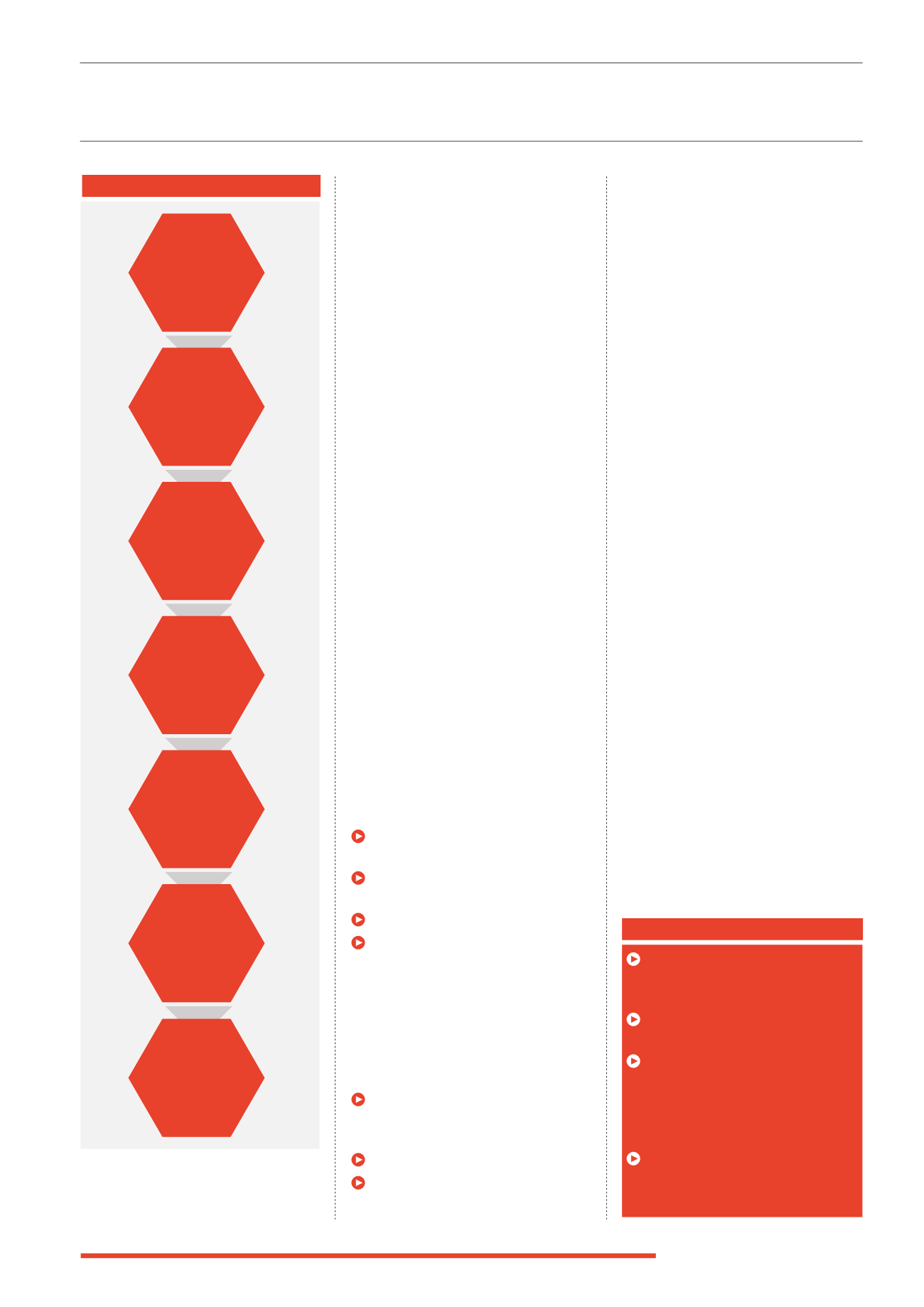
PANEL CREATION STEPS
The key steps where external expertise
could be valuable would be deciding
on the correct filters to apply to reduce
the panel size, and developing a DDQ
questionnaire that is sufficiently
detailed and covers all of the issues that
need to be considered when sourcing
VCT products - it might look similar to the
high level due diligence areas listed in the
chart (left).
The purpose of monitoring the panel
is: to continually review the selection
criteria and ensure that they are right
for the client bank; to assess any new
products that meet the criteria (and
remove any products that no longer
do so); to review sales data and MIS
(management information statistics) to
see if there are any products that the
advisers are not selecting (or those that
have too much money going into them);
to identify any advisers that could do
more VCT business (or those that might
be doing too much); and to review and
act upon adviser feedback.
Putting the panel together and the
ongoing monitoring will probably be the
job of either the investment committee,
a sub committee convened specifically
to look at alternative investments such
as VCTs, or the equivalent body at an
advisory firm. The role of the investment
committee in relation to the panel would
comprise:
Ongoing review of panel selection
criteria
Final decision on investments that go
onto the panel
Review of current panel
Review of MIS (management
information statistics) to ascertain
whether the panel meets adviser needs
a) Volumes and amounts (£) sold
b) Breakdown by manager
c) Breakdown by product
d) Breakdown by adviser
Review of any new market
developments (news, legislation, press
coverage, new entrants, etc.)
Collect and review of adviser feedback
Report back to the full investment
committee or board
CONCLUSIONS
As we’ve seen, reductions in the
amounts that can be saved into pensions
and threats to the tax relief available
in pensions have increased the need
for tax-efficient investment options.
Pension freedoms may require advisers
to use more sophisticated decumulation
strategies, longer lives demand more
tax-efficient accumulation products and
in our low interest rate environment
nearly all investors are still searching for
higher yields. There are a lot of good
reasons to consider investing in VCTs.
The big caveat is that advisers must
ensure that they only use VCTs for
the right clients, and that the right
VCTs are selected. Of course this
comes down to appropriateness and
suitability, assessing the whole-of-the-
market, carrying out comprehensive
due diligence and having a thorough
understanding of the products that are
recommended. For advisory firms who
foresee that they will be doing a lot of
VCT business, using third party review
and comparison sites and setting up a
panel would probably save a lot of time
and effort on their part over the long run.
Identify all VCTs in
the marketplace
Apply filters
to reduce to a
manageable size
Send focused
questionnaire to
those on reduced
list
Evaluate returned
questionnaires and
create a shortlist
Meet with
providers (where
necessary) and
choose panel
Maintain and
monitor the panel
of VCTs
Keep records of
the research and
selection process
KEY POINTS
Suitability should primarily
be based upon the underlying
investments and not the tax reliefs
VCTs can be used to construct tax-
efficient decumulation strategies
Advisers’ due diligence has to cover
a lot of ground and consider features
that are unique to closed funds and
VCTs. It will be a longer process than
due diligence on conventional OEICS
Using a panel and a third party
comparison and review service can
save firms time and effort